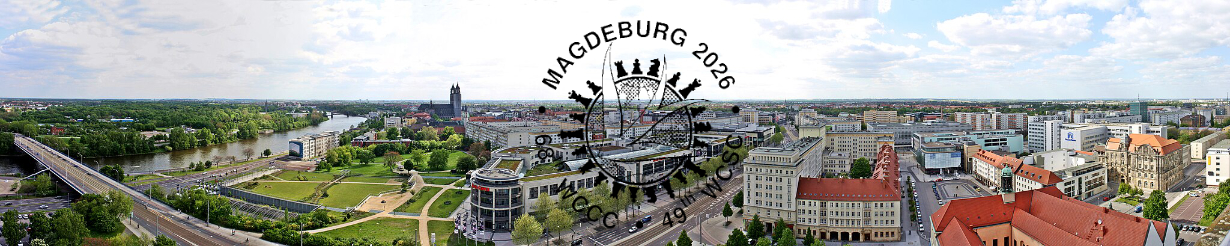

From the Middle Ages to Modernity
Magdeburg is one of Germany’s oldest and most historically significant cities. Its importance reaches far back into the early Middle Ages and is closely linked to the formation of the East Frankish–German Empire. A central figure is Otto I, known as Otto the Great, who made Magdeburg his favored imperial residence. From here, he promoted the Christianization and political organization of the eastern territories of the empire. In 968, Magdeburg became an archbishopric and thus a spiritual center of European importance. Otto’s father, Henry I, had already laid the foundations for this development by securing the eastern borders of the realm and integrating Slavic territories into his system of rule.
Not far from Magdeburg lies Quedlinburg, another key site of Ottonian history. Henry I was buried here, and under Otto I the town developed into an important royal palace and convent for women. To this day, Quedlinburg is shaped by this early period of prosperity and the cultural legacy of the Ottonians.
To the southwest stretches the Harz Mountains, which played an important role not only as a natural landscape but also economically and culturally. Ores were mined here as early as the Middle Ages, strengthening the wealth and power of regional rulers. At the same time, the Harz became a landscape of retreat and legend that still shapes regional identity today.
In the early modern period, Magdeburg gained renewed prominence through Otto von Guericke, a scientist and mayor of the city in the 17th century. With his famous vacuum experiments, such as the Magdeburg hemispheres, he became a pioneer of modern physics and brought international recognition to the city.
Dessau-Wörlitz is also part of the region’s historical cultural landscape. The Dessau-Wörlitz Garden Realm was created in the 18th century under Prince Leopold III Frederick Franz of Anhalt-Dessau and is considered an outstanding example of Enlightenment ideals in architecture and landscape design. The ruling House of Ascania, an ancient German princely dynasty, shaped large parts of central Germany politically and culturally over many centuries.
In the 20th century, the region once again became a center of innovation. In Dessau, the world-renowned Bauhaus school revolutionized architecture, design, and art. At the same time, Hugo Junkers established his aircraft and engine works there, turning Dessau into a major industrial hub where technology, design, and social change were closely intertwined.
Finally, Wittenberg also belongs to the historical surroundings of Magdeburg. As the place where Martin Luther lived and worked, the town became the starting point of the Reformation, fundamentally transforming Europe in religious, political, and cultural terms.
Taken together, the history of Magdeburg and its surrounding region spans from the Ottonian imperial age through the Reformation and the Enlightenment to industrial and cultural modernity – a region in which German and European history is visible within a remarkably compact space.
More about Magdeburg
More information on Magdeburg and local events can be found at Magdeburg Tourist Info. (The language settings may be changed in the upper right corner, labelled “SPRACHEN”.)